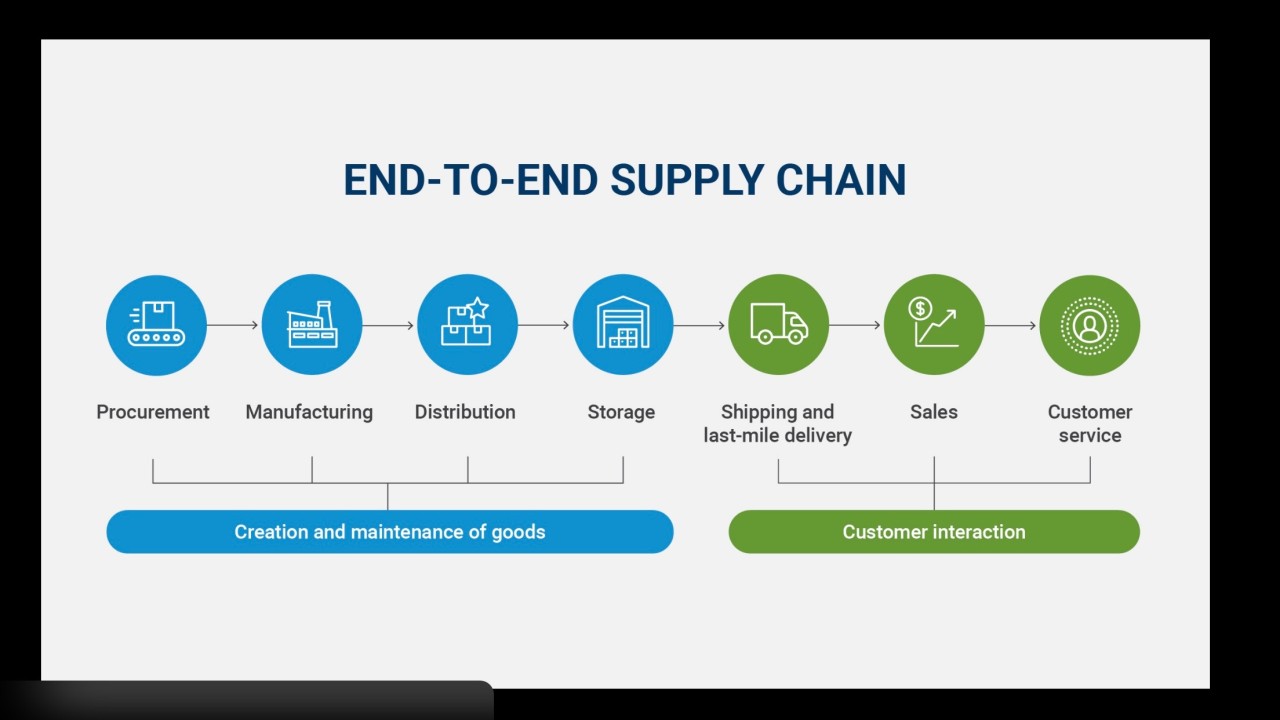
gement (SCM) is about synchronising demand, supply, production, inventory, logistics, and finance into one connected ecosystem that drives profitability and customer satisfaction.
In today’s environment of volatility, shorter product lifecycles,
and rising customer expectations, the supply chain has become a
strategic differentiator.
1. Demand & Planning – Turning Market Signals into Action
Everything starts with demand. Key planning capabilities include:
- Demand Forecasting
- Sales & Operations Planning (S&OP)
- Material Requirements Planning (MRP)
- Capacity Planning
Effective planning ensures:
- The right inventory levels
- Stable production schedule
- Optimised working capital
- Improved service levels
Poor planning leads to excess stock, stockouts, expediting costs,
and margin erosion. Planning can directly impact the financial
performance.
2. Procurement – Building a Reliable Supply Base
Once demand is translated into requirements, procurement activates the supply side. Core activities include:
- Strategic Sourcing
- Supplier Selection & Evaluation
- Contract Management
- Purchase Orders & Scheduling Agreements
- Goods Receipt & Invoice Verification
Modern procurement strategies focus on:
Strong supplier partnerships are foundational to supply chain stability.
3. Manufacturing & Quality – Creating Value Efficiently
Manufacturing converts raw materials into finished goods.
Integrated supply chains connect:
- Production Planning
- Shop Floor Execution
- Quality Management
- Raw Material & Finished Goods Inventory
Quality assurance is embedded across:
- Incoming inspections
- In-process checks
- Final product validation
Operational excellence in manufacturing drives:
- Cost efficiency
- On-time delivery
- Consistent product quality
- Brand trust
4. Inventory & Warehouse Management – Controlling the Flow
Inventory acts as the buffer between demand and supply, but it must be controlled intelligently. Warehouse management ensures:
- Accurate stock visibility
- Optimized storage utilization
- Efficient picking and putaway
- Real-time inventory updates
Advanced warehouse capabilities include:
- Task management
- RF-enabled execution
- Labor management
- Integration with transportation planning
Solutions such as SAP Extended Warehouse Management and SAP S/4HANA enable
real-time coordination between warehouse operations, production, and
order fulfilment. Warehouse excellence directly impacts delivery
performance and cost control.
5. Order Fulfilment & Logistics – Delivering to the Customer
Typical steps include:
- Sales Order Processing
- Available-to-Promise (ATP) Check
- Picking, Packing & Staging
- Shipment & Transportation
- Billing
The goal is simple: ✔ Deliver on time ✔ Deliver in full ✔ Deliver profitably
Visibility across inventory, production status, and transportation is critical to achieving this.
Why Supply Chain Is a Strategic Priority?
Apart from the efficiency, Resilience and visibility are equally important.
Leading organisations focus on:
A mature supply chain balances: Cost + Service + Speed + Flexibility
The Integrated Supply Chain Loop
Supply Chain Management is a continuous cycle:
Forecast → Plan → Source → Make → Store → Deliver → Bill → Improve
Each function is interconnected. Each delay has a downstream
impact. Each improvement compounds across the network. Organisations
that treat the supply chain as a strategic asset can create sustainable
competitive advantage.
💬 As businesses continue their digital transformation journeys,
the supply chain will remain at the centre of operational excellence and
growth strategy. Where is your organization focusing its next supply
chain improvement initiative? Let's connect and exchange thoughts and
knowledge.
Beyond Compliance: SAP Security as Strategic Advantage
In every conversation I have about digital transformation, there's an uncomfortable truth we need to address: TRUST has become our most valuable and most vulnerable business asset.
At the heart of this challenge sits something many still underestimate: SAP security.
These aren't just IT systems, they're the Crown Jewels that house our
financial data, supply chain operations, HR records, and intellectual
property. For most organizations, SAP is the business.
As organizations accelerate their cloud journey through RISE with SAP, the opportunity for modernization is huge! But this shift demands a fundamental rethinking of how we protect the digital core.
Three realities are forcing this transformation
The regulatory landscape is intensifying globally
From NIS2 in Europe to the UK's new Cyber Security and Resilience Bill extending
cybersecurity requirements across critical digital services and supply
chains, SAP systems sit squarely in the crosshairs of compliance
obligations. This isn't just about avoiding fines, it's about
maintaining the license to operate in regulated industries and markets.
With RISE with SAP, understanding the shared responsibility model
becomes a governance imperative, while SAP provides robust Infrastructure security, your data, configurations, and access controls remain your accountability.
The attack surface has exploded.
RISE with SAP unlocks incredible connectivity and agility, but our
ERP systems are no longer isolated fortresses. They're connected
ecosystems spanning multiple clouds, IoT devices, third-party
applications, and AI platforms. Every integration point represents both
opportunity and risk and a single misconfiguration can expose decades of
business-critical data.
Business velocity cannot wait for traditional security approaches
Digital transformation initiatives demand speed and agility.
Security can no longer be the gatekeeper that delays RISE migrations or
S/4HANA upgrades, it must become the guardrail that enables us to
accelerate safely. This can only be enabled when business leaders invite
Security to the table early! The organisations that will thrive are
making a fundamental cultural shift - from "patching vulnerabilities" to
"designing for resilience." They're embedding security by design into
every RISE journey from day zero, not bolting it on after go-live.
They're measuring risk in terms of business impact, not just technical
vulnerabilities.
Most critically, they're reframing SAP security from a cost center to a competitive advantage.
When your digital core is genuinely secure, you can onboard partners
faster, enter new markets with confidence, and leverage emerging
technologies without compromising trust.
Here's the question I encourage every leadership team to ask:
"If our SAP systems were compromised or unavailable for 48
hours, what would that mean for our customers, our operations, and our
brand? And are we truly prepared for that reality?"
If the honest answer gives you pause, then SAP security deserves a different level of attention and investment.
The bottom line: As
we navigate the UK's new Cyber Security and Resilience Bill, NIS2
compliance, and accelerate our RISE with SAP journeys, security isn't
just about protection it's about enablement. When we embed security by
design into our digital core from day one, we don't just mitigate risk;
we unlock the confidence to transform at unprecedented speed and scale.
The digital core of your business deserves nothing less.
The organizations that recognize this today will be the ones defining
their industries tomorrow.

